Warehouse & Industrial Concrete Floors in Buffalo & WNY
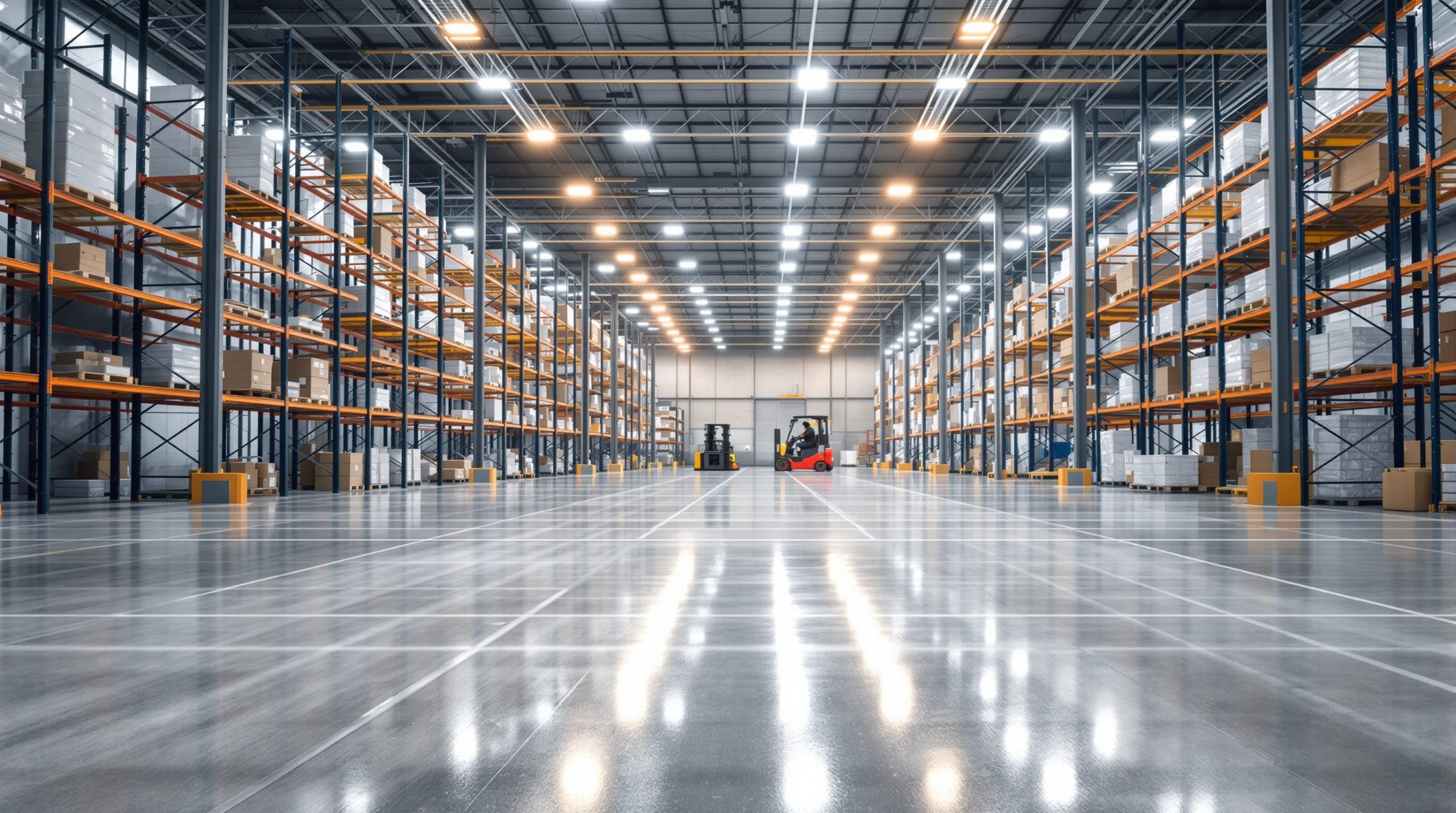
Flat, hard-wearing interior slabs built for racking, forklifts, and heavy equipment. New warehouse floors, slab replacement, and joint repair across Western New York.
Get Your Free Quote
Tell us about your project. We reply fast, usually same day.
Slabs That Take a Beating
An industrial floor is the hardest-working slab on the property. It has to stay flat under racking, take forklift wheel loads all day, and resist abrasion for years. We pour slabs on grade over a vapor barrier and compacted base, reinforced to the loads.
- Slab on grade over vapor barrier and compacted base
- Rebar mat sized to forklift and racking loads
- Dry-shake hardener and hard-trowel finish where specified
- Doweled construction joints and a planned control-joint layout
- Slab replacement and joint filling for existing floors
What does a warehouse floor cost in Buffalo?
Industrial floor pricing depends on slab thickness, reinforcement, flatness spec, and whether a hardener is called for. Typical ranges below.
Standard industrial floor
A reinforced interior slab typically runs $13 to $18 per square foot, including a rebar mat, hard-trowel finish, and joint work.
Hardened / high-flatness floor
Floors that need a dry-shake hardener or a tighter flatness number for narrow-aisle racking sit at the upper end and above.
Slab repair & joint filling
Spall repair, joint filling with semi-rigid filler, and section replacement are quoted per the condition of the floor.
How We Pour an Industrial Floor
Drawings & Load Review
We review the structural slab drawings and loads, then confirm thickness, reinforcement, and flatness.
Base & Vapor Barrier
We compact the sub-base, place a vapor barrier where called for, and set screed points.
Reinforce & Pour
Rebar mat on chairs, dowels at joints, then pump or direct placement with a laser screed.
Finish, Harden & Cure
Hard-trowel finish with a dry-shake hardener where specified, cure per ACI, then saw-cut and fill joints.
Related Commercial Work
One local crew for every commercial concrete need in Western New York.
The CIT Workmanship Guarantee
We have built our reputation across the Buffalo–Niagara metro since 2007 by standing behind every pour. Western NY winters are hard on concrete. We use proper mix designs and installation methods so our work holds up to freeze-thaw cycles, frost heave, and road salt. If something is not right with our workmanship, we make it right — in writing, on every project.
Frequently Asked Questions
How thick should a warehouse floor be?
It depends on the loads. A typical warehouse slab runs 6 to 8 inches, while floors carrying heavy racking and forklift traffic often go to 8 to 10 inches with a heavier reinforcement mat. The structural engineer sets it.
How much does an industrial concrete floor cost in Buffalo?
A reinforced interior slab typically runs $13 to $18 per square foot, including the rebar mat, hard-trowel finish, and joint work. Floors that need a hardener or tighter flatness cost more.
What is a dry-shake hardener and do we need one?
It is a metallic or mineral topping troweled into the fresh surface for abrasion resistance. High-traffic aisles and heavy-use floors benefit; lighter-duty storage floors often do not need it.
Can you replace a failed section without tearing out the whole floor?
Yes. We saw-cut and remove the failed area, correct the base, dowel into the surrounding slab, and re-pour just that section so it ties in level.
Why do warehouse floor joints fail and can you fix them?
Joint edges spall when hard forklift wheels hit an open joint repeatedly. We rebuild the edges and fill the joints with a semi-rigid filler that supports the edge and stops the damage from spreading.
How long before we can load the floor?
Concrete reaches about 70% of its strength in 7 days and full strength at 28 days. We hold heavy racking and forklift traffic until the slab has gained enough strength and give you the dates.